Why the Capital One-Discover Deal Is Bigger Than Most Consumers Realize
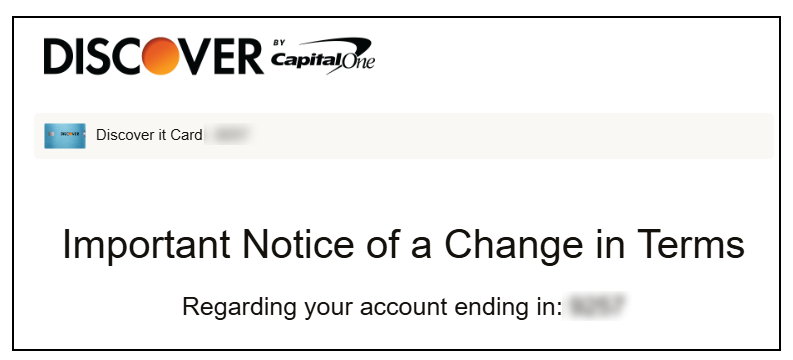
WEST PALM BEACH, FL – Millions of Discover cardholders are beginning to receive notices informing them that their accounts will soon transition into the Capital One ecosystem following the company’s acquisition of Discover Financial Services. For many consumers, the email may come as a surprise.
Some customers may not have even realized Discover had been acquired at all.
The transition notices explain that Discover accounts will eventually be managed through Capital One’s apps, systems, and servicing infrastructure, while certain account features and monitoring services will also migrate into Capital One’s broader platform.
At first glance, the acquisition may appear to be just another banking merger. One credit card company absorbs another, customers get a new mobile app, a different login screen, maybe a few updated rewards features, and life goes on. But beneath the surface, the deal represents something far larger than a simple credit card acquisition.
Most consumers still think of credit card companies as lenders.
Increasingly, however, the world’s largest financial institutions are becoming sophisticated data and behavioral intelligence companies that happen to issue credit cards.
The Real Asset Was Not the Credit Cards
For decades, Discover operated in a unique position within the financial ecosystem. Unlike many major banks that simply issue cards on networks owned by others, Discover controlled both the customer relationship and the payment infrastructure itself.
That distinction matters more than most consumers realize.
Every transaction flowing through a payment network creates valuable intelligence:
- Spending habits
- Merchant relationships
- Geographic activity
- Consumer preferences
- Credit risk patterns
- Fraud detection signals
- Travel behavior
- Recurring subscription activity
- Payment reliability trends
At scale, this information becomes extraordinarily valuable.
The acquisition gives Capital One access not only to millions of cardholders, but also to an enormous payment ecosystem and decades of transactional intelligence. In many ways, the credit cards themselves are only the visible surface layer of the transaction.
The real asset is the data infrastructure underneath.
Your Financial Identity Is Becoming Part of a Larger Ecosystem
That reality becomes even more apparent when reviewing customer communications surrounding the transition. Consumers are being informed that their Discover accounts will soon move into Capital One’s servicing systems, mobile apps, customer management platforms, rewards ecosystem, and monitoring tools.
The notices also explain that previous communication consent agreements and account-related contact permissions may continue under the migrated relationship.
For many consumers, this may simply feel like an account update. Strategically, however, it represents something much larger: the consolidation of customer behavior, transaction history, identity verification systems, communication channels, fraud detection patterns, and financial engagement into a larger unified platform. This is where banking begins to overlap with artificial intelligence, predictive analytics, behavioral modeling, and digital identity infrastructure.
The Importance of Owning the Network
The deal also highlights a broader industry shift that many consumers may not fully recognize: the growing importance of owning the payment network itself. Visa and Mastercard dominate global payment processing, but they largely function as payment rails used by issuing banks. Discover, however, operated its own payment network.
By acquiring Discover, Capital One gains increased control over transaction processing, merchant relationships, interchange economics, fraud analysis systems, and the behavioral intelligence generated from those transactions. That creates strategic advantages that extend far beyond consumer credit cards. In many ways, payment companies are evolving into infrastructure providers for the modern digital economy.
Banking Is Becoming a Behavioral Intelligence Industry
For years, consumers viewed banks primarily as institutions that held money. Increasingly, the world’s largest financial companies are becoming technology-driven intelligence platforms focused on understanding how money moves, how consumers behave, where they shop, how often they travel, what services they subscribe to, and how financial behavior changes over time.
Financial institutions are no longer competing solely on interest rates or rewards points.
They are competing on:
- Data visibility
- Predictive intelligence
- Fraud prevention
- Customer retention
- Ecosystem engagement
- Transaction-level analytics
- Digital identity trust
- Cross-platform behavioral insight
The Capital One-Discover acquisition may ultimately say far more about the future of financial intelligence than the future of consumer lending. And in today’s economy, the information surrounding the transaction may prove even more valuable than the transaction itself.
Key Facts & Details
| Acquiring Company | Capital One |
| Acquired Company | Discover Financial Services |
| Strategic Importance | Control of Discover’s payment network and transaction ecosystem |
| Consumer Impact | Migration of Discover accounts into Capital One systems and apps |
| Key Industry Trend | Financial institutions evolving into behavioral intelligence and data-driven platforms |
| Major Assets Involved | Customer data, payment infrastructure, fraud systems, behavioral analytics, merchant relationships |
| Transition Timeline | Account servicing changes begin July 2026 |
The Capital One-Discover deal is not just about credit cards. It is about ownership of payment ecosystems, transaction intelligence, behavioral analytics, and the growing value of consumer financial data in an AI-driven economy. And as these financial platforms continue to consolidate, consumers may eventually realize that the most valuable thing banks were collecting was never just money – it was information.

About The Author: John Colascione is Chief Executive Officer of SEARCHEN NETWORKS®. He specializes in Website Monetization, is a Google AdWords Certified Professional, authored a how-to book called ”Mastering Your Website‘, and is a key player in several online businesses.
Add STRATEGIC REVENUE as a Google Preferred Source to see more of our business, technology, and digital strategy coverage in Google Search.
Add Strategic RevenueYou can now select the categories you're interested in and receive email updates when new articles are published in only those categories.