
AI Search May Be Biggest Shift in Domain Industry Since Fall of Exact-Match Boom

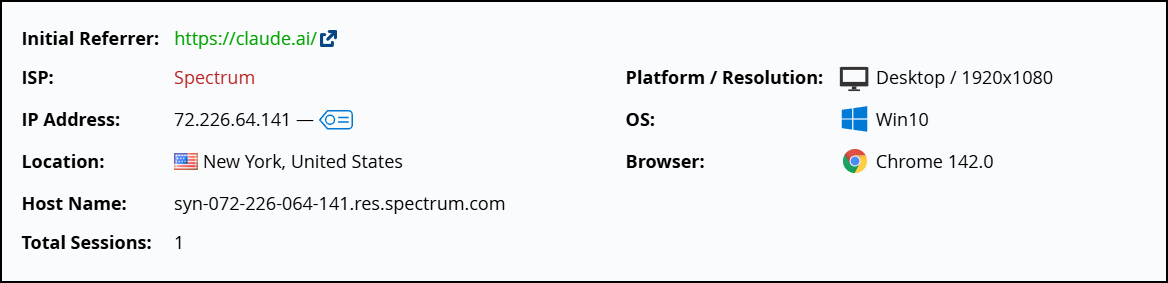
WEST PALM BEACH, FL – For more than two decades, the domain-name market has largely moved in step with Google’s search systems. Investors based valuations on keyword demand, search volume, and the longstanding assumption that visibility in Google ultimately dictated what made a digital asset valuable. But the rapid rise of AI-driven “answer engines” – including ChatGPT Search, Perplexity, Claude (just saw first referral from it today), and others is creating a new reality. Their emergence may represent the most profound transformation in the domain landscape since Google dismantled the exact-match domain (EMD) advantage more than a decade ago.
A shifting foundation: Google no longer the sole gatekeeper
For years, the domain ecosystem behaved like an orbit around a single gravitational force: Google. Whether a domain was purchased for development, lead generation, resale, or type-in traffic, Google was the backbone of discoverability. When Google released its EMD update in 2012, heavily optimizing toward generic keyword domains stopped guaranteeing strong search rankings. Overnight, a large segment of the domaining world had to reassess portfolio strategies.
A similar pattern is emerging now, but at a larger scale. Unlike the EMD era, this time the change is not driven by one company adjusting its algorithm. It’s driven by an entirely new category of search platforms that don’t operate like traditional search engines at all.
AI search behaves differently and that affects domain value
AI-powered engines don’t simply index pages and match keywords. Instead, they generate answers and rely on multiple signals to decide which sources to cite. Early patterns show that these AI systems tend to:
- Favor authoritative brands over keyword-rich domains
- Prioritize longstanding, trusted domains
- Surface recognizable companies or credible sources
- Link out sparingly, meaning only a handful of domains get visibility
Where Google rewarded precise keyword relevance, AI engines reward trust, authority, and recognition – characteristics inherently tied to strong brand names, meaningful domain age, and content quality, not merely keywords.
That shift means a domain’s value becomes less about what exact keyword it represents, and more about what level of credibility it can anchor.
The decline of keyword-dependence and the rise of brand anchors
Think about it: Google now feels a bit like the “old way” of doing search. You ask something and it makes you do the heavy lifting – scrolling through links, opening tabs, comparing information. AI flips that model completely. You ask a question, and you get the answer immediately.
For example, a user no longer types “Florida injury lawyer” and reviews ten blue links and has to read and sift through them all. Instead, they ask: “Who are the best injury lawyers in Florida?”
The AI returns a summarized list, often citing a small set of trusted sources. If it links out, it usually picks:
- Established firms
- Authoritative publishers
- Recognizable brands
This behavior dramatically narrows which domains get traffic. But for premium domain owners, this shift may actually represent an opportunity. While generic exact-match domains lose their mechanical SEO value, category-defining domains gain branding power.
Names become digital “brand signals” – an asset AI systems may reward over thin sites or new, obscure domains.
AI engines still send traffic — just not the way Google does
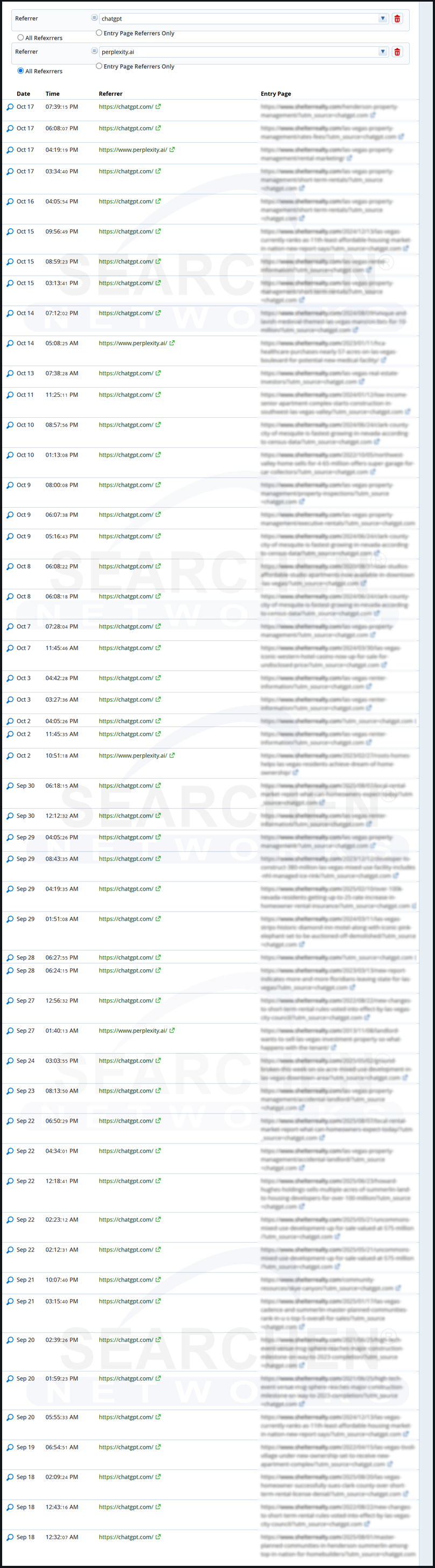
While some fear AI will eliminate clicks entirely, data from platforms like Perplexity and ChatGPT shows the opposite. Both engines display citations prominently, and sites linked within AI answers report measurable referral traffic. Publishers have begun noticing increases from these non-Google sources, even if users are unaware of where the recommendations originate.
This creates a new referral environment guided by:
- page authority
- brand trust
- topic relevance
- semantic signals
- site quality
—not classic keyword optimization.
For domain investors, this means portfolios must be evaluated not only on keyword potential, but on whether the name can become a trustworthy brand that AI systems will consider credible enough to cite.
The domain industry’s next reckoning
The domain world had long been tied to the belief that search engines depend on domain keywords to understand relevance. That mindset is long gone. But now, search behavior is splintering across multiple AI platforms, and the importance of fielding a memorable, authoritative brand identity is rising.
In many ways, AI search pushes the domain market toward a future where:
- Brandable names outperform generic keywords
- Older, trusted domains gain visibility advantages
- Authority outweighs pure match terms
- Niche content wins only when paired with credibility signals
The investors who adapt to this pivot – focusing on domains with long-term brand potential rather than short-term SEO gains – may be positioned to benefit the most.
The Rise of G-E-O — Generative Engine Optimization (GEO)
As AI search engines reshape how information is discovered, a new business discipline is also emerging alongside traditional SEO: G-E-O, or Generative Engine Optimization (GEO). Unlike classic SEO, which focuses on ranking within Google’s link-based results, G-E-O is about positioning your brand, domain, and content to be selected, cited, and trusted by AI-driven answer engines.
G-E-O emphasizes:
- Authority signals (brand strength, domain trust, long-term credibility)
- Clear topical identity so AI models understand what your site stands for
- Structured, factual content that AI can parse and cite reliably
- Consistency across your domain footprint so your brand becomes the “safe default” for an AI citation
In other words, G-E-O is not about chasing keywords – it’s about earning trust within the AI ecosystem. And in an era where users increasingly receive direct answers instead of link lists, mastering Generative AI Optimization may become just as essential as SEO once was.
A turning point for publishers and domain owners
This moment feels similar to the shift that followed Google’s EMD update, but broader. Instead of one system changing its rules, the world now has five or more simultaneous search ecosystems, many of which bypass traditional keyword rankings entirely.
For domain owners plugged into the market for 10, 15, or 20 years, it may require rethinking everything from acquisition strategy to development plans. And for the first time in decades, Google is no longer the only force determining which domains win or lose.
I believe the industry hasn’t fully caught on to the scope of this shift. Many investors are still evaluating domain value through a Google-only lens, not realizing AI search may change and/or redefine which digital assets hold long-term strategic advantage. If early trends continue and if traffic patterns keep shifting away from traditional search, this change may prove even more consequential than the fall of exact-match dominance. And I wouldn’t be surprised if the domain world begins rewriting its valuation rules sooner than expected.

About The Author: John Colascione is Chief Executive Officer of SEARCHEN NETWORKS®. He specializes in Website Monetization, is a Google AdWords Certified Professional, authored a how-to book called ”Mastering Your Website‘, and is a key player in several online businesses.
Add STRATEGIC REVENUE as a Google Preferred Source to see more of our business, technology, and digital strategy coverage in Google Search.
Add Strategic RevenueYou can now select the categories you're interested in and receive email updates when new articles are published in only those categories.

Fantastic and timely analysis John, thanks for your research on this. I agree with your findings.
Great article! Honestly fascinating. Watching this space closely.
Wondering what you think 0f the term AEO? Are you grouping it with GEO? I think google and Gemini 3 are positioning themselves to remain dominant within their own AI offerings, therefore taking reins on this reshaping of domain value.
Thank you, appreciate the comment. I only came across the term GEO (Generative Engine Optimization (GEO) very recently myself, even though I’ve been watching every shift extremely closely for years. I’m familiar with AEO too, but I’m not overly attached to either acronym. Whichever term sticks is going to be the one the industry adopts, the same way “SEO” eventually became the default.
Your point about Google and Gemini positioning themselves to stay dominant is spot-on. It actually reminds me of the period when Google was suddenly forced to compete with Twitter’s real-time updates. That pressure pushed Google to update its own results faster and faster until “waiting for an update” basically disappeared. Search became real time because they had no choice.
We’re seeing that same dynamic now. Google is being pushed by AI competitors on all sides, and to survive they’re trying to do two things at once – answer your question directly and still refer you to links. They’re trying to protect the old model while embracing the new one simultaneously. Whether that keeps them on top remains to be seen, but the pressure is definitely reshaping how visibility will work going forward.
Great job on this, John.
It would be valuable to readers if your follow-up article would identify specific examples of the types of domains that could fade versus those that may gain enhanced value.
While I realize that that’s not an easy exercise, it may serve as a catalyst for hundreds of additional articles by others on this same topic of prospective winners and losers.
The (related) topic that everyone needs to learn about is Agentic Commerce/Agentic Payments. This is the new paradigm for eCommerce, and what you’ve highlighted (GEO) very much plays into that, i.e., optimizing sites for agent discovery.
For anyone who has an interest in further exploring Agentic Commerce, look into the following topics: x402 (Coinbase); AP2 (Google); ERC-8004 (Ethereum Foundation).
Gene – always great to see your comments here. You’ve been commenting on this blog for years, If I remember correctly, you were an early pusher towards Ethereum long before most people caught on. I should have listened more closely back then.
I appreciate your insight on this piece. You’re absolutely right: a follow-up that highlights specific types of domains that may ould gain authority would be valuable. That’s a the direction I plan to take next as I continue to watch this trend— something practical that might help people understand where AI-driven discovery is heading and how domain value could shift because of it. I will certainly be watching closely, as many here, my livelyhood depends on it.
As for Agentic Commerce and the frameworks you mentioned (x402, AP2, ERC-8004), to be totally candid, I haven’t dug deeply into those yet. Not for lack of interest — just because this AI/digital discovery shift has pulled me into its own rabbit hole. But based on your track record, it’s likelt well worth my time to explore them. I appreciate the nudge.
Thanks for adding real substance to the discussion, as you’ve done many times over the years. These are the kinds of conversations that move the industry forward, and I’m glad even a very small portion of them are happening here.
Hi John. Your comments are way too kind, but thank you.
I do wish that you’d publish more often, even though that takes a huge amount of effort (especially with all the research you put into your pieces).
Even though I have only a very cursory understanding of these Agentic Commerce topics (trust me, very cursory!), I recently discussed this at a high level in front of 40 Chief Procurement Officers in NYC, recently – and to my surprise, only one or two of them had any familiarity with this important subject.
To save your readers some time, here are a few articles that will help anyone leapfrog their peers on this subject:
https://www.mckinsey.com/capabilities/quantumblack/our-insights/the-agentic-commerce-opportunity-how-ai-agents-are-ushering-in-a-new-era-for-consumers-and-merchants#/
https://www.kearney.com/industry/financial-services/article/agentic-payments-a-new-frontier-in-digital-commerce
https://aws.amazon.com/blogs/industries/agentic-payments-the-next-evolution-in-the-payments-value-chain/
https://panteracapital.com/http-402s-modern-makeover/
https://www.finextra.com/blogposting/29778/deep-dive-is-x402-payments-protocol-the-stripe-for-ai-agents
this is garbage
go tell this bs to Rick Schwartz. this website is built on a bs domain. you have to advertise on domaining.com to get views.
Reggie, since you brought up Rick’s name, I’m guessing you’re assuming this article is meant to take something away from .COM or diminish its value. It isn’t. There’s nothing in this analysis that paints .COM or domains in general in a negative light. If anything, it highlights new areas of opportunity and additional pathways for value.
In a space overflowing with “new alternatives” (think gTLDs), AI isn’t introducing anything harmful to domains – it’s adding positives in multiple ways. More discovery methods, more branding value, more ways strong domains can stand out (just look at that screenshot in the article – pretty amazing – huge new traffic source).
As for this blog advertising on Domaining.com, I’m grateful to be included there (and NamePros) – or anywhere I can advertise. That’s how good internet marketers operate. But Domaining.com only brings traffic to one category: domains. This blog is read widely beyond that and, as you can see from the praise on the top right, many readers enjoy it. Traffic comes from variety of different sources – it’s also included in Google News. I just happen to be a big domain guy, so yes, I appreciate being included on Domaining.com.
Unfortunately, I wasn’t able to click your username to see what kind of innovative web presence you bring to the industry, or what positive intellectual property you’ve contributed. Oh well – thanks for your comment nonetheless.
I genuinely enjoy thinking, analyzing, and sharing insights with others. Everything I know came from the old forums in the early 2000s – SEO, digital marketing, domain strategy – and from the people who shared their analysis back then. That’s how this whole industry learned. I’m simply continuing that same spirit.