• Home
  • Domains
  • Internet & Tech
  • Security & Privacy
  • Google & Search
  • Editorial Praise
  • Contact

Strategic Revenue - Domain and Internet News

Internet news authored by John Colascione

Register Domain Names

  • Isn’t Print Dead?
  • Killer Acquisition
  • New gTLD Death
  • Online Censorship
  • Gullible Domainers
  • You’re A Loser
You are here: Home / Business / How Google Became the Most Popular Search Engine; Eyes on Innovation

How Google Became the Most Popular Search Engine; Eyes on Innovation

February 18, 2019 By John Colascione Leave a Comment

*** Here Is A List Of Some Of The Best Domain Name Resources Available ***


NEW YORK, NY – In the early 1990’s, the Internet was in its infancy. At that time, a great majority of information on this new and interesting “World Wide Web” was from colleges and universities. With the growth of this vast amount of information came interest in a better way for finding things which birthed some of the webs very first search engines, many of which you’ve likely never even heard of. Some who used the Internet at that time might be more likely to remember more popular players such as Infoseek, Lycos, Altavista and of course, Yahoo,  to name just a few. That’s how people found things back in the mid 90s and these search engines were very primitive; for the most part all they did was rank web pages based on their content and keywords.

However, something else very big was brewing.
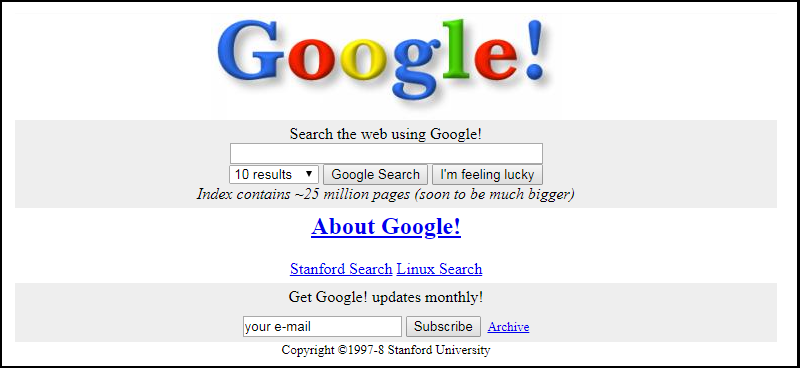
https://web.archive.org/web/19981111183552/http://google.stanford.edu

In early 1996, two Ph.D. students at Stanford University in California were working on a new type of search engine that would rank web pages differently; Larry Page and Sergey Brin originally called it “BackRub” since in addition to reading content and keywords, it would detect and count ‘back-links’ to determine the importance of a website. The two students concluded that if they could measure the amount of web links pointing to a document on the web, than they could effectively assign a score based on the number of “backlinks” pointing in, and then add that score to any keyword or content relevance initially found, thus ranking web sites based on these overall values. This resulted in a much better and highly quality user experience.

By late 1997 the domain name Google.com was registered and the two students who were running the search engine from a friend’s garage, were ready to rename their innovative search project to “Google” – a word which represented a long string of zero’s and ones. Today that word is a verb in the English dictionary, meaning “to search for information about (someone or something) on the Internet using the search engine Google,” no other search engine has obtained this sort of notability in dictionaries.
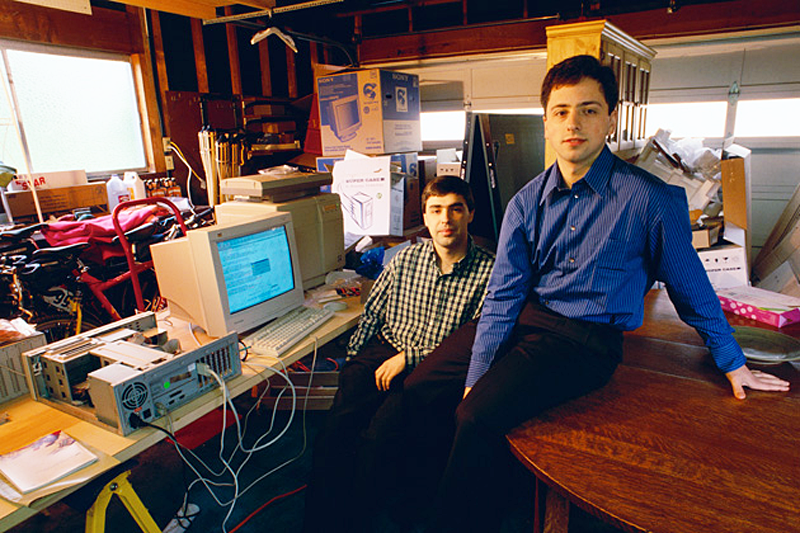
Larry Page (left) and Sergey Brin in their friend Susan Wojcicki’s garage.

While, Google was utilizing its unique “search quality” for its popularity within the search industry, its first major competitor, rising star Yahoo!, which coincidentally was also started at Stanford University, began eyeing acquisitions of other growing search engines to fuel its own growth. Yahoo founders Jerry Yang and David Filo, two Electrical Engineering graduate students who were excelling more in Yahoo’s hugely successful email services, set their sights on other search engines such as Inktomi, Overture, AltaVista and AlltheWeb later acquiring all four of them including numerous other acquisitions.

However, Google continued to utilize its unique link measuring capability and sophistication for improving itself through technology and innovation to not only measure the number of links that were pointing to sites, but to go much further than that – to measure each links’ anchor text, their authoritativeness, their topic related similarities between the linking pages, and a measurement of how trustworthy each individual link was for its target document or web page.

This new game-changing technology was called “PageRank”, named after Google co-founder Larry Page. By 1998 a patent application was submitted to the United States Patent and Trademark Office by Google Technology Inc. The patent titled ‘Method for Node Ranking in a Linked Database‘ described a sophisticated system that could provide “an objective ranking based on the relationship between documents whose content has a large variation in quality and importance.”
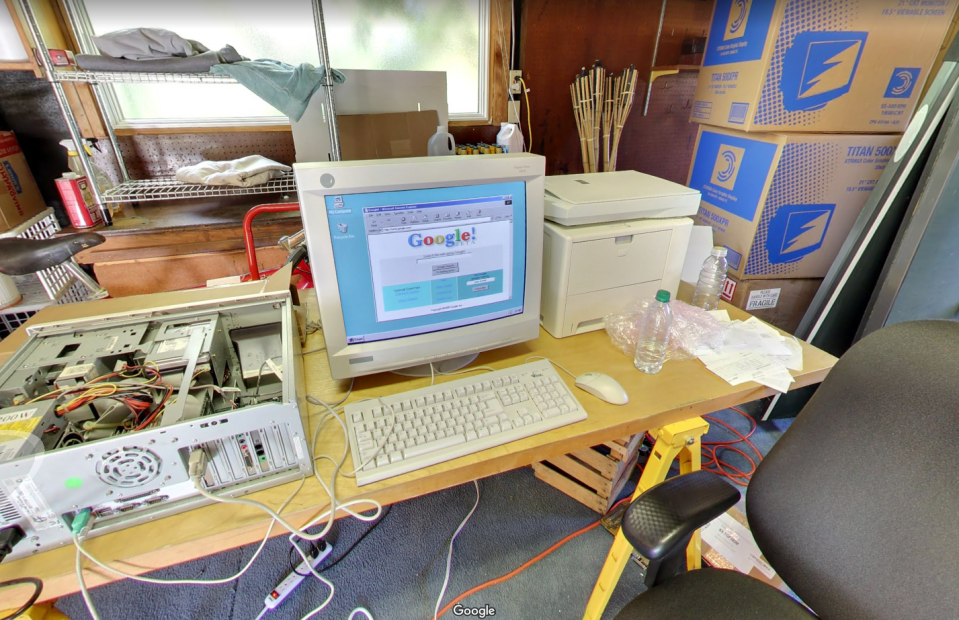
By early 1999 Google was looking at lots of interest in their new technology.

This was the beginning of the end for everyone else in search.

By early 1999 Google was looking at lots of interest in their new and unique technology and were beginning to see offers of millions in investment capital with a first initial round of $25,000,000 from venture capital firms Kleiner Perkins and Sequoia Capital who targeted an IPO for the business. Against Larry and Sergey’s personal preferences the business began selling text-based ads on the search engine to generate revenue and launched its Google Ads program in October 2000. The two founders nearly sold the business in quarrels with early investors about compromising search quality over revenue.

By 2018, Google was pulling in revenues of 136.8 billion and was providing jobs to more than 85,000 employees.

John Colascione 2024
John Colascione

About The Author: John Colascione is Chief Executive Officer of SEARCHEN NETWORKS®. He specializes in Website Monetization, is a Google AdWords Certified Professional, authored a how-to book called ”Mastering Your Website‘, and is a key player in several online businesses.

Filed Under: Business, Google Search Tagged With: .google, Acquisition, Acquisitions, AltaVista and AlltheWeb, AltavistaYahoo, Authoritativeness, Backlink, Backlinks, BackRub, California, Colleges, Content, David Filo, Dictionary, Documents, Domain Name, Early Investors, Electrical Engineering, Email Services, Employees, Founders, Google Ads, Google Technology Inc., Importance, Infoseek, Inktomi, Internet, Investment Capital, IPO, Jerry Yang, Keywords, Kleiner Perkins, Larry Page, Link, Link Measuring, Linked Database, Linking Pages, Lycos, Measure, Method, Node Ranking, Overture, PageRank, Patent, Patent Application, Popularity, Quality, Rank, Ranking, Registered, Related, Relevance, Rrevenue, Score, Search, Search Engine, Search Engines, Search Industry, Search Quality, Sequoia Capital, Sergey Brin, Similarities, Stanford, Stanford University, Students, Susan Wojcicki, Target Document, Technology, Text Ads, Topic, Trustworthy, Universities, User Experience, USPTO, Venture Capital, Web Links, Web Page, Web Pages, Web sites, World Wide Web, Yahoo

*** Here Is A List Of Some Of The Best Domain Name Resources Available ***


Leave a Reply Cancel reply

Your email address will not be published. Required fields are marked *

Search This Site

by: John Colascione

John Colascione

Long Island Guide - The Guide to Long Island New York

John Colascione is Chief Executive of SEARCHEN NETWORKS® He specializes in Website Monetization, authored a book called Mastering Your Website, and is a key player in several Internet businesses.

Follow Me

John Colascione Twitter

The First Fiction Horror Story Based Entirely On An Internet Domain Name

The First Fiction Horror Story Based Entirely On An Internet Domain Name
A cyber thriller where the countdown to death is always ticking… Available in Paperback, Kindle and Audiobook.

USED CARS ENTERPRISE

auto buyers market
Auto Buyers Market – Shop Used Cars by Participating Dealers at autobuyersmarket.com

In The News

  • DNJournal: New Book From Veteran Domainer
  • From Brandable to Exact-Match Geo Domain
  • InnovateLI: Two Deals, One Very Interesting Digital
  • Internet Commerce Association: John Colascione
  • NamesCon: Featured Attendee: John Colascione
  • Long Island Media Inc, SmartCEO, Future 50
  • Speakers, Name Summit, John Colascione
  • Speakers, Real Estate Summit, John Colascione
  • 24 Leading Domain Experts Analyze 2017

Popular Stories

Did DuckDuckGo Just Acquire Premium Domain “Duck.com” from Google?

New gTLD? Not So Fast; History Suggests New ‘Right of the Dots’ Could = Total Failure

Could Domain Investing Industry End with Legal Provision for Domain “Hoarding”

Websites and Domain Names to Become Insignificant within 20 Years or Less

Does the Domain Industry Suffer From Own Versions of Trumpted “Fake News” Stories?

Quotes to Follow

quote icon The domain name is equivalent to Gold. It is the only packaged item which is globally tax-free, portable, with value that is universal across different cultures. quote icon – Frank Schilling

quote icon Domains have and will continue to go up in value faster than any other commodity ever known to man. quote icon – Rick Schwartz

quote icon  Google knows you, your friends, your likes, what entertains you, where you are in the world at any given time. Google will soon predict your next action, your next thought, based on a collaboration of thoughts past. quote icon – John Colascione

Like These Headlines?

Enter your email address:

Delivered by FeedBurner

T.L.D. Brokerage

Domain Brokers

From Defense to War: U.S. Government Deploys Bold New “WAR.gov” Domain

WASHINGTON, D.C. - The United States government has begun directing Internet traffic from the long useed Defense.gov - the primary digital home of the Department of Defense for more than two decades - … [Read More...]

Bots, Ad Networks & Fake Lead Form Fills; Phones Don’t Work, Emails Bounce

WEST PALM BEACH, FL –  Have you recently noticed your lead forms being filled out with fake information, phone numbers that don't work and/or email addresses that bounce back? Google's Display Network … [Read More...]

Report: ID Verification Service for Auto Dealers Breach Exposed Millions of Records

SOUTHFIELD, MI - A newly surfaced dark-web listing claims that 700Credit, a provider of credit-reporting and identity-verification services for auto dealers, suffered a substantial data breach in late … [Read More...]

Domaining blog recommended by Domaining.com

Copyright © 2010-2025 StrategicRevenue.com - Property of Internet Marketing Services Inc.   FeedBurner: RSS
By using this site you agree to our Terms of Service and Privacy Policy. If you do not agree, please exit the service.