Slipknot Files Lawsuit Over Two-Decade Battle for Slipknot.com Domain Name
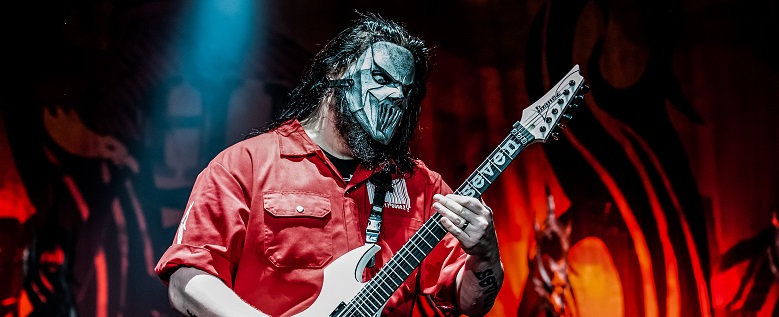
RICHMOND, VA – Slipknot, one of heavy metal’s most commercially successful and enduring acts, has launched a new legal campaign to reclaim control of a domain name if it feels belongs to them more than twenty years after the web address was registered.
The case, filed in the U.S. District Court for the Eastern District of Virginia (Slipknot, Inc. v. slipknot.com), targets the long-time registrant of Slipknot.com, a domain the band says has misled fans and profited from its identity since the early 2000s. According to the complaint, the current site displays advertising links for concert tickets, band merchandise, and other music-related products, many of which are unrelated or potentially counterfeit.
The band argues that the domain’s use has diverted legitimate web traffic away from its official site, slipknot1.com, and confused fans who assume they are visiting an authorized page. Attorneys for the group claim that the registrant, whose identity has remained obscured behind privacy services, registered the domain in 2001 and has refused to transfer it despite repeated requests.
Legal Fight Two Decades in the Making
While Slipknot controls its verified online presence at slipknot1.com, the more ‘official looking’ slipknot.com address has been a sore point for years. The lawsuit asserts that the domain’s operator “registered and used the name in bad faith,” citing its monetized (PPC) links as commercial intent.
Under the Uniform Domain-Name Dispute-Resolution Policy (UDRP) – the global standard for resolving domain conflicts such as this one, complainants must prove three elements: that a) the domain is identical or confusingly similar to their trademark, that b) the registrant lacks any legitimate interest in it, and 3) that it was registered and used in bad faith. Slipknot’s legal filing aims to meet all three.
Still, domain law veterans note that older registrations can complicate such cases. The registrant has held the address for nearly a quarter century, which could support a defense that it predates the band’s trademark filings or was originally acquired for a legitimate fan or informational purpose. If the owner can show a history of noncommercial use – or even credible plans to launch a fan resource – that could undermine the band’s bad-faith argument. Bruce Springsteen v. Jeff Burgar (WIPO D2000-1532)
While each case is fact-specific, there are only a handful of other common legitimate-use arguments typically raised in domain disputes. These include claims that the name was intended for a generic use unrelated to the brand, or part of an early good-faith business or personal project. In most cases, panels look for clear evidence of these intentions—such as archived content, correspondence, or business documentation—before crediting them as legitimate interests under the UDRP.
Commercial Confusion
The group’s attorneys say that’s not the situation here. In their filing, they point to the domain’s revolving mix of ticket and merchandise ads as evidence of profit-driven behavior. That pattern, if proven, aligns with classic cybersquatting – using a brand-identical domain to capture traffic and generate ad revenue through confusion.
Such disputes are common across the entertainment industry, where the earliest years of the internet left many artists without control of their own names online. Domains registered in the late 1990s and early 2000s are now frequently the subject of takedowns, WIPO complaints, or federal lawsuits as musicians and brands consolidate their digital assets.
Parking Isn’t Automatically Bad Faith
Under UDRP precedent, domain parking itself isn’t inherently illegitimate. A registrant has the right to earn passive income from a domain – provided the ads aren’t targeting the trademark owner’s brand.
Many investors own large portfolios of generic or descriptive domains. Parking those names with ad feeds is considered a normal commercial use when the ads are contextually neutral.
What crosses the line is when:
- The ad feed automatically populates with links about the trademarked brand (concert tickets, merchandise, etc.),
- Or when the domain’s value is derived because of that confusion.
In the Slipknot.com example, it’s possible the registrant didn’t choose those ads – most parking platforms (like Sedo, Bodis, or GoDaddy CashParking) serve algorithmic ads based on the domain’s text string. If the system sees “Slipknot,” it will naturally display music-related or concert-related ads.
Some parking providers can exclude or filter certain ad categories or keywords.
Many services allow domain owners to:
- Block brand keywords (“Slipknot,” “tickets,” “merch,” “tour”)
- Change category targeting (e.g., “Lifestyle” or “Technology” instead of “Music”)
- Use a neutral lander with no ads or only generic links (“Entertainment news,” “Streaming services,” etc.)
If the registrant had done that, and the landing page showed non-infringing, generic content, they’d have a much stronger “legitimate interest” defense. It would demonstrate that they were not seeking to profit off the band’s name – just passively monetizing an old domain.
Still Risky
The problem is that most parking companies use automated keyword matching to maximize click-through revenue. So even if the domain owner didn’t mean to, the system often shows ads referencing the band- which panels and courts interpret as commercial exploitation of the trademark.
That’s why many domainers facing a famous-name conflict will:
- Remove ad feeds entirely,
- Replace the lander with a simple “This domain may be available” page, or
- Redirect to unrelated content to show lack of bad faith (no attemp to confuse the visitor)
Important Point
Again, it does not help the band that they waited so long. When a company or artist waits well over two decades to assert rights over a domain, it seriously undermines the strength of their claim, both legally and perceptually.
Doctrine of Laches (Delay/Prejudice)
While “laches” isn’t formally part of UDRP procedure, panels and courts still consider delay as a factor in evaluating bad faith and legitimate interest.
If a complainant sits on their rights for 10–20 years without objection, it can and should suggest that:
- They didn’t truly consider the registration harmful;
- The registrant had reason to believe their use was acceptable; and
- The complainant is only acting now because the domain’s value increased.
In U.S. courts (under the ACPA, not UDRP), laches can be a full defense – the idea being that a plaintiff cannot “sleep on their rights” while another party invests in or maintains a domain.
Trademark owners have not just a right, but an obligation to protect their mark. Failing to do so risks dilution and weakens future claims of infringement. When a brand allows an identical or confusingly similar domain to exist unchallenged for decades, it signals to panels and courts that enforcement was not a priority – a lapse that can erode the strength of the mark and diminish the credibility of any later complaint.
What Comes Next
The court will ultimately determine whether the domain’s owner acted in bad faith and whether Slipknot has sufficient trademark grounds to demand a transfer. If successful, the case could bring Slipknot.com under the band’s control – closing one of the longest-running examples of brand-domain separation in modern music.
- Domain Name: SLIPKNOT.COM, Creation Date: 2001-02-05
- U.S. Trademark: SLIPKNOT, Serial 98072647- Mark Type: Service Mark, First Use: Apr. 04, 1996
If not, the ruling could reinforce the rights of early registrants and further establish – or weaken – the standing of trademark holders who fail to act promptly and/or wait decades to protect their marks.
About The Author: John Colascione is Chief Executive Officer of SEARCHEN NETWORKS®. He specializes in Website Monetization, is a Google AdWords Certified Professional, authored a how-to book called ”Mastering Your Website‘, and is a key player in several online businesses.
Add STRATEGIC REVENUE as a Google Preferred Source to see more of our business, technology, and digital strategy coverage in Google Search.
Add Strategic RevenueYou can now select the categories you're interested in and receive email updates when new articles are published in only those categories.