
 *** Here Is A List Of Some Of The Best Domain Name Resources Available ***
WEST PALM BEACH, FL – Google has introduced a brand new reporting feature in AdSense that finally uncovers when (or if) Google decides your ad layout is generating accidental clicks. The addition of “Confirmed Click” reporting, along with Google’s new Policy Ad Serving Status breakdowns, signals a deeper shift in how Google views monetization, layout strategy, and publisher behavior.
This update does not just provide data. It confirms that Google’s internal philosophy has changed dramatically from what it encouraged for nearly two decades.
A Historical Reversal
Veteran publishers and developers will remember the era when AdSense advised its users to blend ads directly into content. Entire site architectures were built on the principle that matching fonts, link colors, and decluttered borders improved engagement. Google’s optimization teams taught this openly while their entire ad-systems design elements seemed key for disquising ads into content.
Today, those same design patterns can and will reduce your revenue.
Confirmed Click is Google’s accidental click prevention system. When Google decides your layout might be be designed a little “too-well” or is producing unintended taps, it forces users to confirm their intent before counting the click. The impact can be severe: fewer clicks, lower RPM, and reduced advertiser demand.
This system has existed for years, but Google never provided visibility into when or how it was applied. Publishers simply saw unexplained drops.
Now, with the new reporting, that quiet enforcement is finally visible.
Why This Matters for Developers and Strategists
This is not a small interface upgrade. This is a window into how Google’s risk detection models evaluate:
- UX
- layout structure
- mobile interactions
- scroll behavior
- ad proximity
- traffic quality
- content-attached ad placements
The revelation is clear. The modern ad ecosystem rewards separation, clarity, and intent verification. It no longer rewards blending or native mimicry.
This contradicts more than a decade of widely adopted industry design practices that Google itself once pushed.
Google’s New Policy Status Reporting Adds Another Layer
The update also introduces a four-tier system for ad serving:
- regular
- at risk
- restricted
- disabled
Combined with Confirmed Click reporting, developers can now identify the precise moment when Google decides a layout is problematic or a traffic source is creating too much accidental engagement.
This empowers publishers, but it also shifts responsibility sharply onto them.
The Strategic Takeaway
Google’s new transparency makes one thing obvious:
Google now prioritizes advertiser risk reduction over publisher optimization.
This is not inherently bad, but it confirms a long-running trend. Google is moving away from engagement-centric monetization and toward safety-centric monetization.
For developers, designers, and growth strategists, this means:
- new rules for layout spacing
- updated best practices for mobile UX
- reevaluating long-standing ad placement templates
- rethinking “native” design structures
- monitoring traffic sources with far more attention
The industry must adapt to this shift, because Google’s models clearly already have.
Where to Find Confirmed Click Reporting in Google AdSense
Step-by-step navigation: (Depending on your layout)
- Log in to Google AdSense Go to https://www.google.com/adsense and sign into your account.
- Open the “Reports” section On the left-hand sidebar, click: Reports
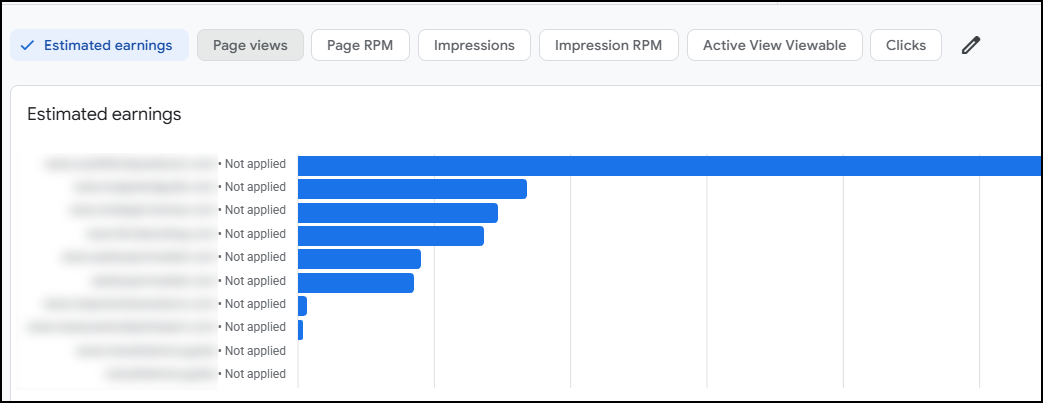
- Choose a report, such as in my example below, “Sites“
- In the Breakdowns dropdown or plus icon next to Breakdowns, select “Confirmed Click Status”
- Apply the breakdown

Confirmed Click reporting is new. The philosophy behind it is not. Google has been moving in this direction quietly for years. Now, for the first time, the data makes that transition visible.

About The Author: John Colascione is Chief Executive Officer of SEARCHEN NETWORKS®. He specializes in Website Monetization, is a Google AdWords Certified Professional, authored a how-to book called ”Mastering Your Website‘, and is a key player in several online businesses.
Leave a Reply