New York Seizes 12 Domain Names Used to Sell AI-Generated Celebrity Deepfakes
NEW YORK, NY – New York prosecutors have seized 12 domain names used by websites accused of selling and distributing AI-generated pornographic deepfakes depicting approximately 1,200 real people without their consent.
Manhattan District Attorney Alvin L. Bragg Jr. announced the seizures Monday, calling the action the largest known seizure of AI-generated celebrity deepfake websites to date. The domains were taken pursuant to court orders as part of an ongoing investigation by the office’s Cyber Crime Bureau.
According to prosecutors, operators and content creators used artificial intelligence tools to manipulate existing photographs and videos into realistic-looking sexual images and videos. The approximately 1,200 people depicted were overwhelmingly women and primarily public-facing individuals, including actors, politicians, athletes, musicians, social media influencers and activists.
The websites were not simply hosting AI-generated imagery. Prosecutors say they were largely dedicated to nonconsensual intimate imagery, explicitly advertising deepfake pornography and allowing such material to be published, distributed and sold.
“1,200 individuals had their faces and bodies stolen and turned into illegal pornography on 12 different websites – without their knowledge or consent,” Bragg said.
The seizure is particularly notable because authorities targeted the domain names themselves, effectively cutting off access to the websites rather than relying solely on requests to remove individual pieces of content.
WIRED independently observed several of the affected domains displaying a “THIS DOMAIN HAS BEEN SEIZED” notice before the announcement. According to the publication, some of the websites had operated for years and videos hosted on them had accumulated tens of thousands of views.
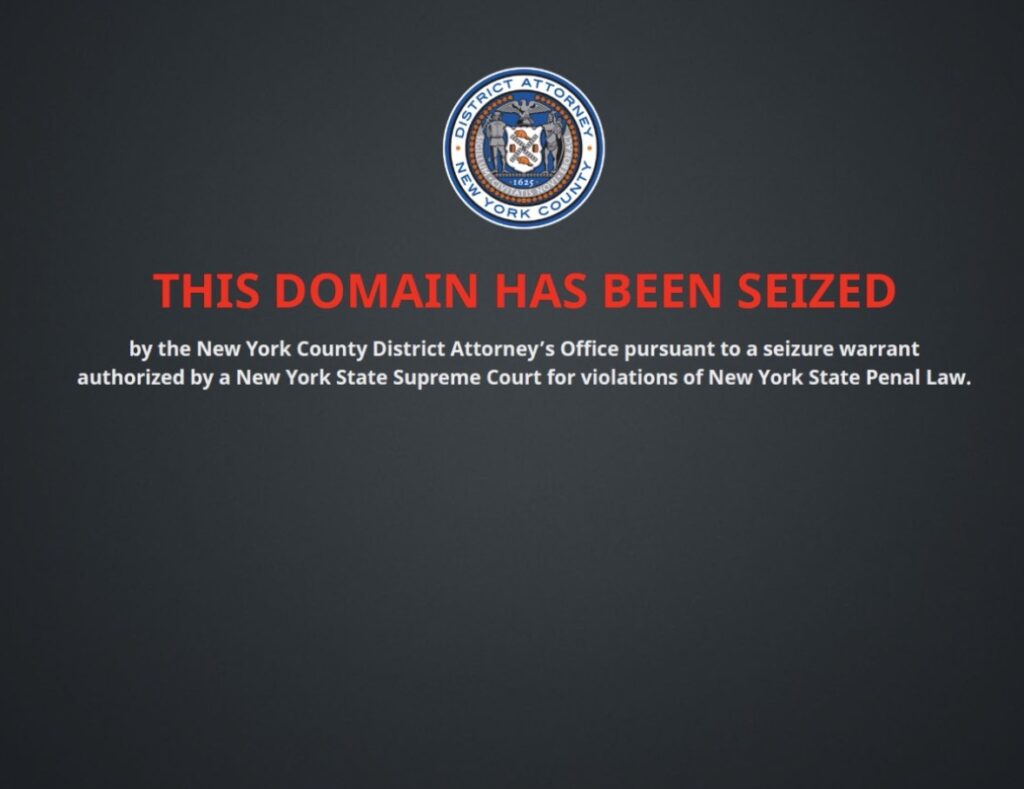
The Manhattan DA’s office has not publicly identified the 12 seized domain names. WIRED, which independently identified several of the affected sites, also withheld their names, consistent with its practice of avoiding additional exposure for websites distributing nonconsensual deepfake pornography. Prosecutors said they will continue monitoring for attempts to reappear under new domains, while the investigation into the operators and uploaders remains ongoing.
The case is aimed specifically at realistic, nonconsensual sexual deepfakes involving identifiable people, not AI-generated imagery generally. It also shows prosecutors increasingly targeting the Internet infrastructure used to distribute and monetize illegal synthetic content.
The seizures also raise a broader issue for domain registrars, hosting providers and other online infrastructure companies as governments look for more direct ways to disrupt websites built around illegal AI-generated content.
About The Author: John Colascione is Chief Executive Officer of SEARCHEN NETWORKS®. He specializes in Website Monetization, is a Google AdWords Certified Professional, authored a how-to book called ”Mastering Your Website‘, and is a key player in several online businesses.
Add STRATEGIC REVENUE as a Google Preferred Source to see more of our business, technology, and digital strategy coverage in Google Search.
Add Strategic RevenueYou can now select the categories you're interested in and receive email updates when new articles are published in only those categories.