
Who Needs Domains and Websites Anyway? Google Say’s “You’re A Loser”

NEW YORK, NY – It started way-back years ago when business directory owners noticed that Google looked like it may be starting to get into the local directory game. These cool little listings with pointers on helpful maps started to show up on Google with phone numbers, addresses and links to websites. After a while webmasters started to say “Hey, this is diverting traffic away from my business directory… what’s going on here?”
Further down the road, Google began to use not just addresses and phone numbers it gathered from around the web, but other sites content too such as reviews – without attribution of any kind and would hold stance that site owners who don’t want their content used, well, Google can just remove the site completely from its search engine. Golly Jee Willikers! – Thanks Google!
The Federal Trade Commission investigated Google’s practices and after a very lengthy investigation (about 19-months) determined that Google did in-fact utilize its search algorithm to boost its own products’ placement as well as scrape competitors content, yet ultimately, regulators decided against prosecution. This was, by the way, around the time that then Google CEO Eric Schmidt was hanging out at the White House all the time.
Fast forward to today and it’s not just business directories Google is going after; it’s everyone with a website – so long as that website provides an answer to a question that Google has means and know-how to answer. For instance, the screenshots below are an example of the types of websites where Google is putting out-of-business, a practice becoming common place. Each service, which typically ranked number 1 in Google search for the query typed into the search box, will now rank number two – that is, underneath Google’s handy answer.
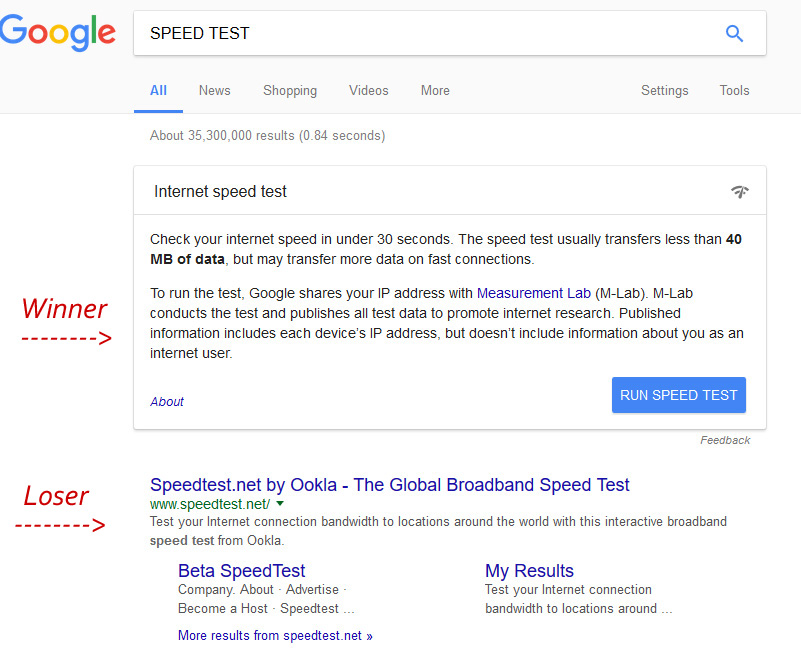
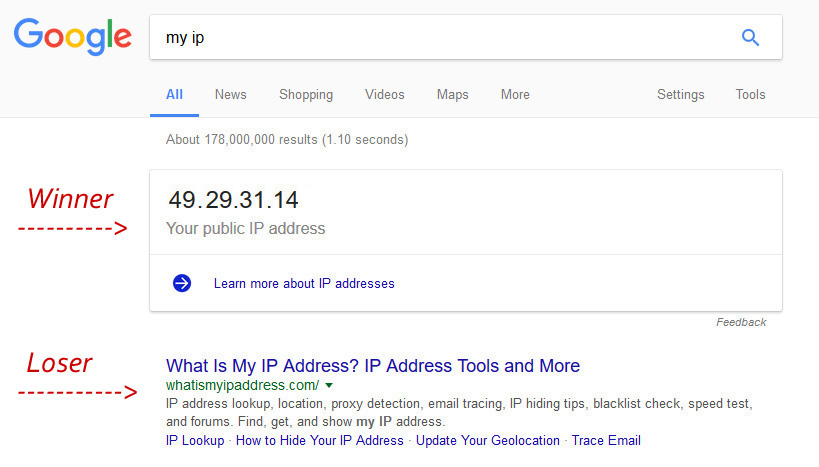
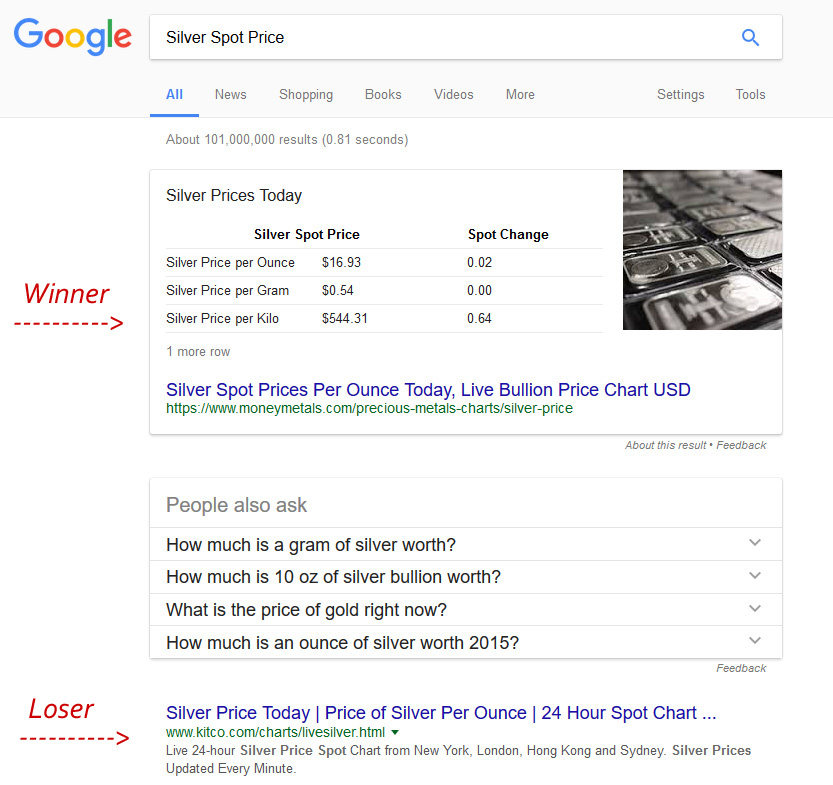
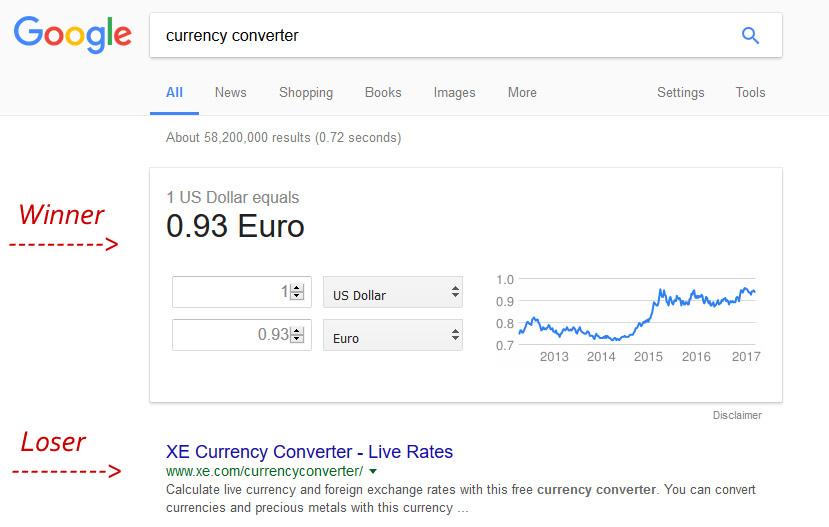
Now you’re probably thinking, well, spot number two’s really not that bad. But let me tell you why it’s not good either; because the question the searcher had is now already answered and there is no-longer a reason to visit the website anymore. The searcher now has the answer they were looking for without even having to visit a website, thanks to a giant ever-changing database of the webs information + Google.
So you might want to take this into consideration when you’re building your next project or website. Try and build something that doesn’t rely entirely on search for Traffic, or at least relies on it as little as humanly possible – because as you can see above, search is a very risky business.
Discover your perfect web address with all the tools to get sta

About The Author: John Colascione is Chief Executive Officer of SEARCHEN NETWORKS®. He specializes in Website Monetization, is a Google AdWords Certified Professional, authored a how-to book called ”Mastering Your Website‘, and is a key player in several online businesses.
Add STRATEGIC REVENUE as a Google Preferred Source to see more of our business, technology, and digital strategy coverage in Google Search.
Add Strategic RevenueYou can now select the categories you're interested in and receive email updates when new articles are published in only those categories.


At least feel good the Trump administration doesn’t like Google. 🙂
As always, to win with google you have to continuously up your game. Google snippets still usually don’t give all the information you need.
Conversely, if your web page contains a table or bullet point list, google may put this in a google snippet at the top of their results even if your page is lower in the top ten results. Try to taylor your pages, so the info will appear in a google snippet.
Agreed, if Google trusts the page strongly, it may use your bullet list, but I would image the page would have to be very high authority for Google to do that. But I could see that happening yes, I think I have seen that before. I was trying to find an example. Look how long this definition is ‘show more’ You even get trends data. https://www.google.com/search?q=domain+definition&ie=utf-8&oe=utf-8#dobs=domain
Agreed.
I’ll look to at least 5 to 25 different websites before I am confident that I got the answer.
Very good tips to be aware of and your best bet is to browse Google Ventures / Alphabet to pick an idea they are not touching… Good luck with that BTW.
Google also has put the dictionary sites out of business, even though most of those sites are monetized with AdSense.
That’s right the sites may be monetized with AdSense where Google has to split the revenue, compared to search ads with cost more and Google keeps 100%.
I am afraid that with the rise of AI this trend continues.
It is clear that google is working on becoming “the internet”.
The ultimate betrayal. Vinton Cerf and Google.
https://research.google.com/pubs/author32412.html
I agree with the author….rather than the commenters I’ve read to date.
This is a big deal. If all you want is a personal website…or provide a service/product….fine.
You can get over this hump.
But if your bread and butter is driving traffic to your site in exchange for information….such as this site…..and you rely on revenue dollars or subscriptions (to then sell additional product such as ebooks)….
this trend is a killer.
I didn’t know the backstory on how google was getting away with ripping off content. crazy.
why don’t I just copy and paste this article to my website (with attribution of course) and drive all the hard work of this author into my own coffers?
well in addition to it being wrong, I’d assume I’d possibly get sued.
So how exactly does google get away with it? different rules for the big guys.
thanks for the article.
Domains are the best tool against Google. I run sites that directly compete with Google, have a look, click my name.