FBI and U.S. Pentagon Data Breaches Expose an Uncomfortable Cybersecurity Reality
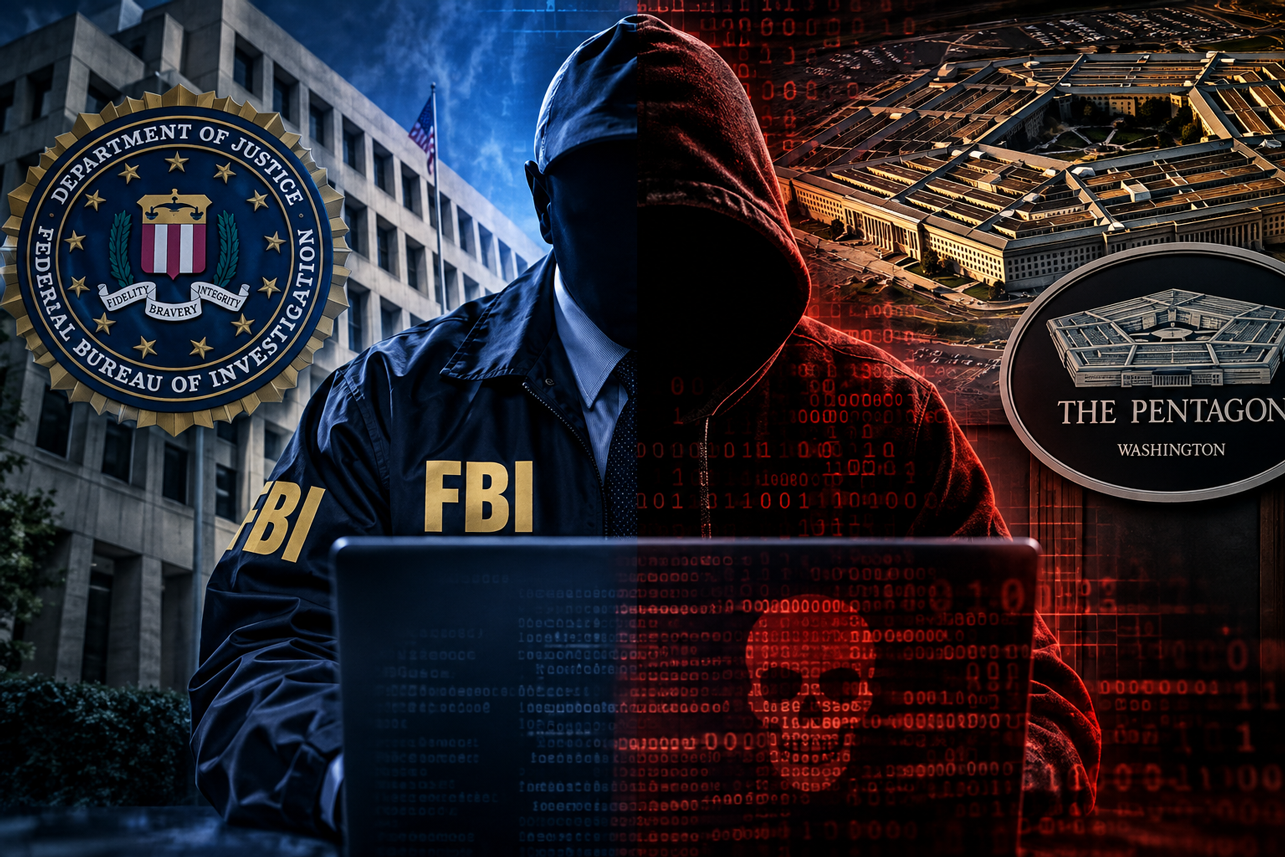
WASHINGTON, D.C. – Two of the most security-sensitive organizations in the United States have been dealing with major data breaches at nearly the same time, exposing sensitive information connected to millions of military personnel and potentially thousands of current and former FBI employees.
The incidents involving the Federal Bureau of Investigation and the U.S. Department of Defense are separate, and there is currently no established evidence that they were carried out by the same attackers. Taken together, however, they provide a striking reminder of just how difficult it has become to protect sensitive information, even inside organizations entrusted with national security, intelligence and federal law enforcement.
The Pentagon breach is enormous by almost any measure. A breach involving the Defense Manpower Data Center, one of the Department of Defense’s central repositories for personnel information, affected approximately 2.76 million living people and another 294,000 deceased individuals, according to a U.S. defense official cited by ABC News.
The exposed information included Social Security numbers and details about jobs held by military and civilian personnel. Other reporting indicates the compromised records included names, dates of birth, contact information and military occupational information.
Unauthorized users had access to the affected system from October 2025 until July 2026, meaning the intrusion persisted for approximately nine months before the vulnerability was discovered and remediated.
The Defense Manpower Data Center maintains information involving active-duty and reserve military personnel as well as civilian employees, contractors, retirees, veterans and military family members.
The Pentagon has said it has not found evidence that the compromised information has been misused. The FBI, meanwhile, has been confronting a very different but potentially serious breach.
On September 23, the FBI publicly acknowledged that a cybercriminal group was claiming to have compromised the FBIJobs.gov portal and potentially obtained personally identifiable information belonging to FBI employees.
At the time, the bureau said it was investigating whether the point of compromise was within a third-party provider or the FBI’s own enterprise. Subsequent reporting has provided considerably more detail.
The hacking group ShinyHunters claimed responsibility for the attack and claimed to have obtained a massive collection of information associated with FBI and Justice Department personnel and applicants. Some of the group’s broadest claims have not been independently verified and should be treated as allegations.
However, reporting from multiple news organizations indicates that highly sensitive information was compromised. Reports have described exposed information including employee names, addresses, Social Security numbers, job information and, in some cases, sensitive medical records.
The incident is particularly concerning because FBI personnel can work on counterintelligence, organized crime, terrorism, drug trafficking and other investigations where protecting an employee’s identity and personal information may have implications extending well beyond ordinary identity theft.
The cause of the FBI breach has also become clearer. Reuters reported on October 6 that the FBI removed an Accenture contractor over the incident. FBI cyber chief Brett Leatherman said the breach resulted from a security failure involving a platform managed by a third-party organization after a contractor failed to install a security patch that had specifically been issued to protect the platform.
Sources told Reuters that the affected platform was Oracle PeopleSoft. That detail may be one of the most important lessons to emerge from either breach. Organizations can spend enormous amounts of money on cybersecurity and still remain vulnerable because security is ultimately dependent on an entire chain of systems, software, employees, contractors and outside vendors.
A single vulnerable server can matter. A single uninstalled security patch can matter. A third-party platform can matter. And information that appears administrative rather than operational can become extraordinarily valuable when it identifies the people performing sensitive government work.
The Pentagon incident presents another troubling example. Sensitive personnel information reportedly remained accessible to unauthorized users for months before the intrusion was discovered.
These incidents do not mean that the Pentagon’s classified military networks or the FBI’s investigative systems were broadly compromised. There is no evidence supporting such a conclusion based on the information currently available. But that distinction should not minimize what happened.
Personnel databases can contain some of the most useful information available to criminals, foreign intelligence services and sophisticated social-engineering operations. Names, addresses, Social Security numbers, employment information, occupational specialties and other personal details can potentially be combined with information obtained from previous breaches, public databases and social media. That information can then be used to build remarkably detailed profiles of individuals.
The FBI itself routinely warns businesses and the public about cybercrime, data theft, ransomware, phishing and the importance of installing security updates. The Department of Defense operates some of the most sophisticated information and cybersecurity infrastructure in the world. Yet both organizations have now found themselves confronting significant compromises of sensitive personnel information.
For businesses, the lesson should not be that cybersecurity is hopeless. It should be exactly the opposite. If institutions with enormous cybersecurity budgets, specialized personnel and national-security responsibilities can suffer damaging breaches, no business should assume that a firewall, antivirus subscription or IT provider makes its information automatically safe.
Cybersecurity increasingly depends on continuous maintenance: installing patches quickly, limiting access to sensitive information, encrypting stored data, monitoring systems for unusual activity, reviewing third-party vendors and reducing the amount of valuable information exposed through any single system.
The FBI and Pentagon incidents demonstrate another increasingly important reality. An organization’s cybersecurity may only be as strong as the least secure system, contractor or vendor connected to it. And sometimes the most consequential breach does not begin with someone breaking through the front door. It begins with a door someone forgot to lock.

About The Author: John Colascione is Chief Executive Officer of SEARCHEN NETWORKS®. He specializes in Website Monetization, is a Google AdWords Certified Professional, authored a how-to book called ”Mastering Your Website‘, and is a key player in several online businesses.
Add STRATEGIC REVENUE as a Google Preferred Source to see more of our business, technology, and digital strategy coverage in Google Search.
Add Strategic RevenueYou can now select the categories you're interested in and receive email updates when new articles are published in only those categories.