Google Begins Sending Quarterly Warnings Over Deepfakes and Unlawful AI Content

MOUNTAIN VIEW, CA – Google Ads is sending advertisers an unusual quarterly policy reminder specifically warning about deepfakes, non-consensual intimate imagery and other forms of unlawful synthetic content.
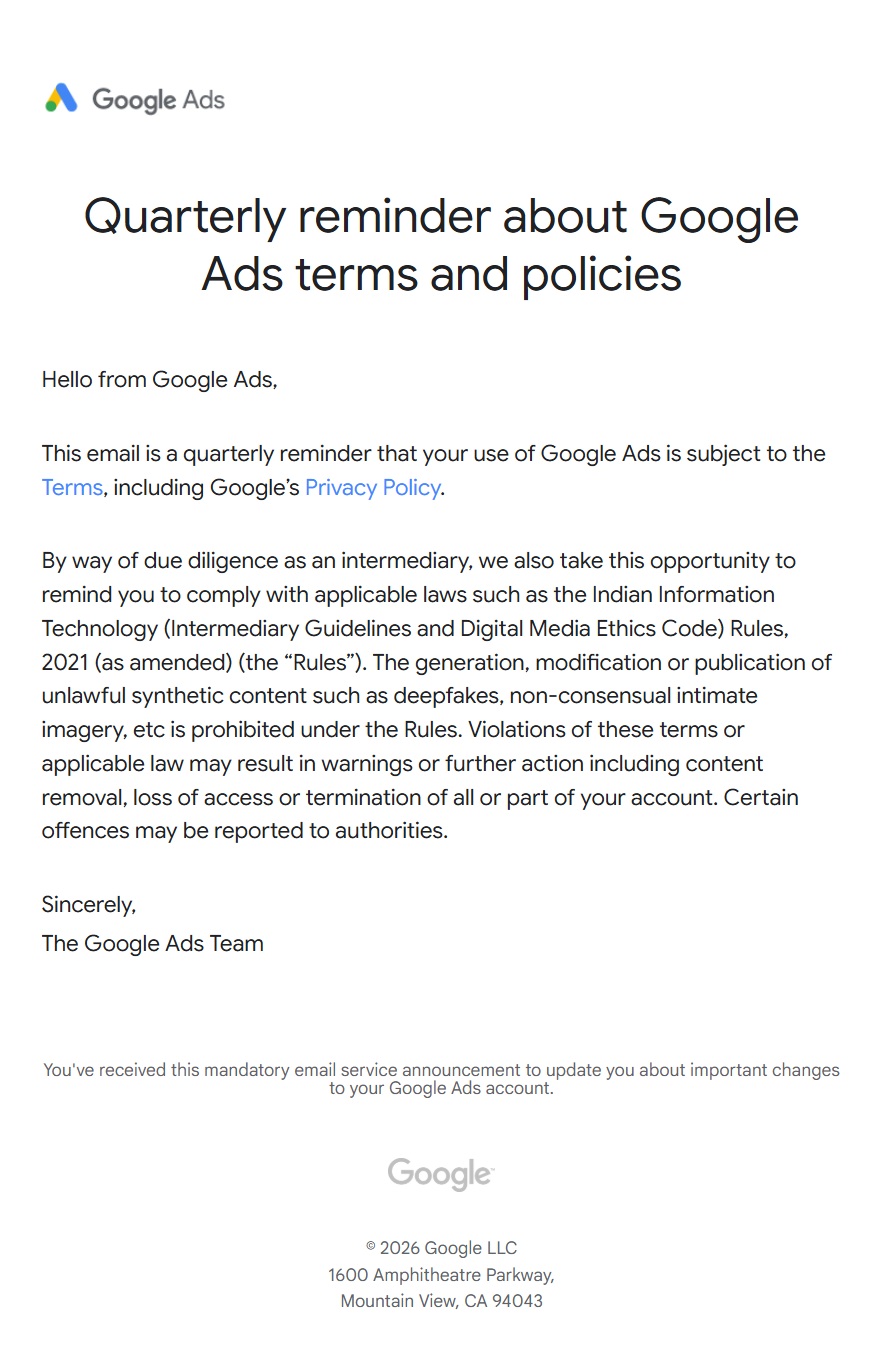
The email, sent under the subject line “Quarterly reminder about Google Ads terms and policies,” initially resembles a routine reminder that advertisers remain subject to Google’s terms and privacy policy. But the message quickly turns to artificial intelligence and India’s recently strengthened rules governing synthetic media.
“The generation, modification or publication of unlawful synthetic content such as deepfakes, non-consensual intimate imagery, etc is prohibited under the Rules,” Google told advertisers.
Google also warned that violations could result in content removal, loss of account access or termination, and that certain offenses may be reported to authorities.
The notice follows amendments to India’s Information Technology (Intermediary Guidelines and Digital Media Ethics Code) Rules that took effect in February 2026. The changes significantly expanded requirements surrounding synthetically generated information, including deepfakes and other AI-generated material.
Importantly, the warning should not be interpreted as a prohibition on ordinary AI-generated advertising images.
India’s rules distinguish between synthetic content generally and synthetic material that violates applicable law. Government guidance specifically identifies concerns including obscene material, impersonation, misleading content, non-consensual intimate imagery and material harmful to children.
A computer-generated image of a fictional person, product, office or landscape, for example, is not inherently a prohibited deepfake simply because artificial intelligence was used to create it. The more serious concerns arise when AI is used to realistically depict an identifiable person saying or doing something that never occurred, impersonate someone, deceive viewers or create other unlawful material.
The timing and quarterly nature of Google’s notice are also notable. India’s Ministry of Electronics and Information Technology says the amended rules strengthened intermediary user-awareness requirements, including requiring certain information to be provided to users at least once every three months.
The Indian government said in August that the rules are intended to combat threats associated with AI-powered deepfakes while also requiring labeling and traceable metadata for permissible AI-generated content.
Google has separately been preparing its advertising products for broader AI transparency requirements. In July, the company announced new AI labeling capabilities allowing advertisers to identify image and video creatives generated or modified using artificial intelligence. Google cited emerging AI transparency requirements in India, the European Union and New York as reasons for the change.
The quarterly email therefore appears to be less of a warning against using generative AI itself and more of a reminder that advertisers remain responsible for how synthetic media is created and used – particularly when real people, impersonation, deception or unlawful material are involved.

About The Author: John Colascione is Chief Executive Officer of SEARCHEN NETWORKS®. He specializes in Website Monetization, is a Google AdWords Certified Professional, authored a how-to book called ”Mastering Your Website‘, and is a key player in several online businesses.
Add STRATEGIC REVENUE as a Google Preferred Source to see more of our business, technology, and digital strategy coverage in Google Search.
Add Strategic RevenueYou can now select the categories you're interested in and receive email updates when new articles are published in only those categories.