UpdraftCentral Compromise Shows Why WordPress Sites Should Minimize Plugin Use
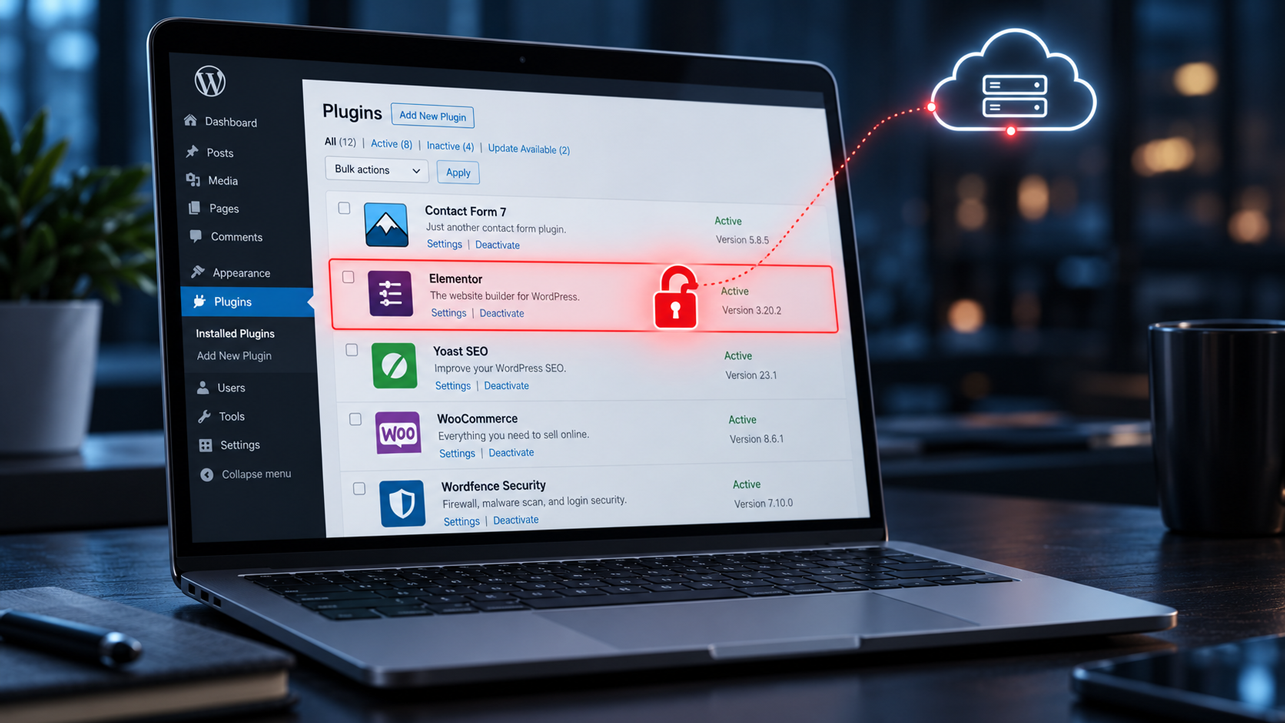
WEST PALM BEACH, FL – One of the most practical ways to reduce a WordPress website’s exposure to security problems is to keep its plugins to the minimum necessary. A newly disclosed incident involving TeamUpdraft offers a timely example of why that discipline matters, particularly when plugins connect a website to outside management services.
TeamUpdraft, the company behind the UpdraftPlus backup plugin and UpdraftCentral management service, disclosed unauthorized access to its website during the weekend of October 17–18, 2026. The company believes its customer database was accessed, potentially exposing customer information and connection keys for several of its services.
According to Wordfence’s incident report, attackers used valid UpdraftCentral connection keys to issue remote commands to connected WordPress websites. Those commands allowed them to upload, activate and delete malicious plugins. Because the commands carried trusted signatures, affected sites could accept them as authorized activity.
For business owners, the distinction matters. An outside service with permission to manage a website can become an entry point when its credentials are compromised.
A Trusted Connection Became the Entry Point
Wordfence reported that sites containing the earlier fix for an UpdraftPlus authentication-bypass vulnerability could still accept instructions signed with the compromised keys. Fixing that earlier vulnerability did not invalidate the stolen credentials. That is an uncomfortable scenario for website owners who assume keeping plugins updated addresses every security concern. Updates remain essential, but access granted to outside platforms also needs attention.
The exposure was not universal. Wordfence identified websites connected to TeamUpdraft’s cloud-hosted UpdraftCentral service as the primary concern. Having UpdraftPlus installed did not, by itself, establish that a website was exposed to this attack. TeamUpdraft says its plugin downloads and self-hosted UpdraftCentral were unaffected by the vendor breach.
Why Every Plugin Should Earn Its Place
WordPress plugins make it possible to add useful features quickly. Over time, however, a business website can accumulate overlapping tools, abandoned experiments and integrations that nobody regularly reviews. Each addition creates another maintenance responsibility. When it includes remote access, it also raises questions about who holds the credentials, what those credentials permit and how access can be revoked.
Keeping plugins to a minimum makes that oversight more manageable. Website owners should be able to explain why each installed plugin is needed, who maintains it and whether it connects to another service. There is no magic number that makes a website secure. A single plugin with extensive permissions can introduce substantial exposure. The practical goal is to eliminate unnecessary dependencies while maintaining the functions the business actually needs.
What Affected Website Owners Should Do
In its October 20 update, TeamUpdraft’s official incident notice lists UpdraftPlus 1.26.13 for Free and 2.26.13 for Premium as releases that disconnect older UpdraftCentral connections. Owners should install those versions or later and follow the vendor’s current instructions.
The company also directs cloud-service users to inspect connected sites for unfamiliar users and plugins, remove existing connection keys and change administrator passwords. TeamUpdraft account holders should change their account passwords and reset two-factor authentication where enabled. UpdraftVault users must reconnect their sites before backups to that service resume.
For businesses, this incident reinforces a straightforward website-management principle: install deliberately, review access regularly and remove tools that no longer serve a purpose. Convenience is valuable, but every additional connection deserves scrutiny when it can reach the website your customers depend on.

John Colascione is Chief Executive Officer of SEARCHEN NETWORKS®, a digital marketing and technology company founded in 2001. An entrepreneur, author, and digital publisher with more than 25 years of experience, he specializes in search engine marketing, Website Monetization, domain names, and online business development. He is the author of Mastering Your Website and publishes commentary on technology, digital marketing, and the evolving Internet economy. Read more at JohnColascione.com.
Add STRATEGIC REVENUE as a Google Preferred Source to see more of our business, technology, and digital strategy coverage in Google Search.
Add Strategic RevenueYou can now select the categories you're interested in and receive email updates when new articles are published in only those categories.