Google Local Services Ads Now Charges for Missed Calls, Making an Already Expensive Program Harder to Justify
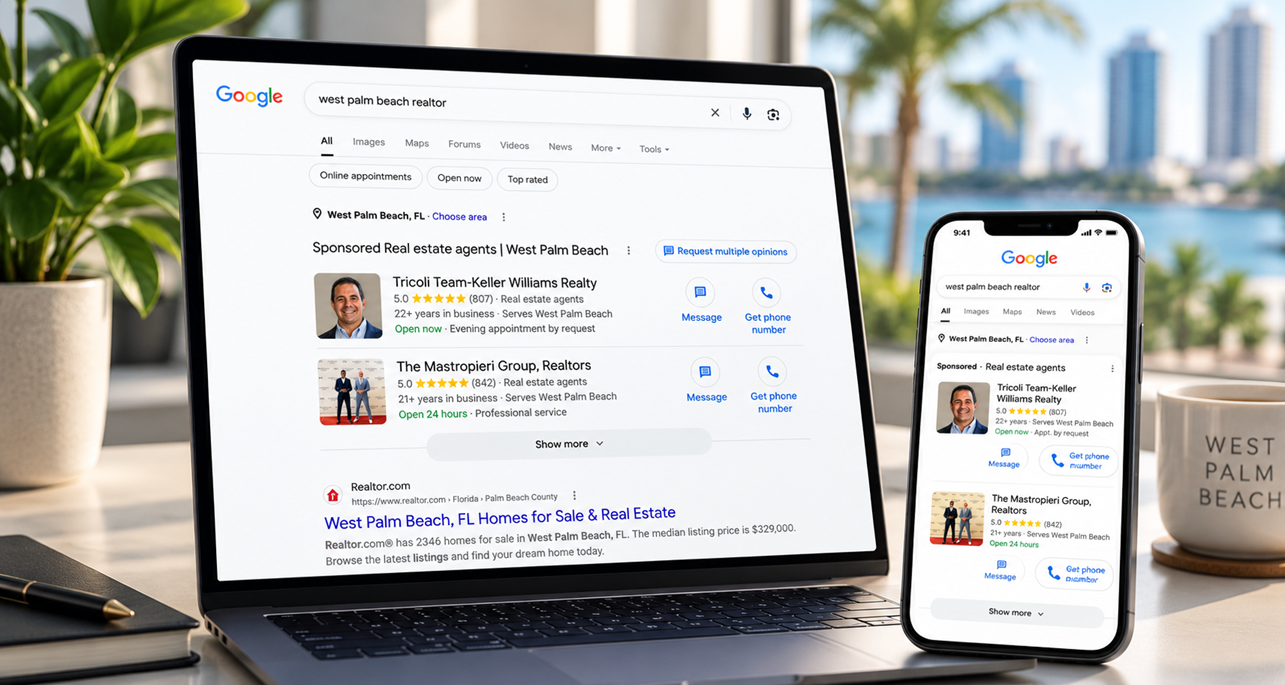
WEST PALM BEACH, FL – I’ve never been particularly enthusiastic about Google’s Local Services Ads program. In my experience working in internet marketing, I’ve generally found the leads expensive, sometimes questionable in quality and often difficult to justify for smaller local businesses operating on limited advertising budgets.
Now Google has introduced another reason to question the program’s value: Businesses can be charged for certain telephone calls they never even answer. Effective October 1, 2026, Google expanded its Local Services Ads billing policy to include missed telephone calls when the caller remains on the line for more than 20 seconds during the advertiser’s business hours.
The change was first reported by Search Engine Land in August and is confirmed in Google’s own Local Services Ads documentation. In other words, someone can find a plumbing company through a Google advertisement, call the business, let the telephone ring for 25 seconds and hang up without ever speaking to anyone.
That unanswered call can now qualify as a billable lead. For a platform that markets itself around charging businesses for customer leads rather than ordinary advertising clicks, I find this terrible.
Local Services Ads Were Already Too Expensive
One of my longstanding criticisms of Local Services Ads has been the cost. For many smaller businesses, particularly independent contractors, plumbers, electricians, landscapers and other local service providers, the expense of generating leads through Google can consume a substantial portion of their advertising budgets.
The cost per lead varies depending on the industry, location, competition and bidding strategy, but individual leads can cost tens or even hundreds of dollars in competitive markets. That might be justifiable if the inquiries consistently turned into paying customers. Unfortunately, that isn’t always what happens.
Businesses can receive calls from people comparing prices, seeking free advice, asking questions unrelated to their services or simply shopping around with little intention of hiring anyone. Some of those inquiries may be legitimate from Google’s perspective, but that doesn’t necessarily make them commercially valuable.
A business paying $75 for a lead that results in a two-minute conversation and no meaningful sales opportunity has still spent $75. If that happens repeatedly, the advertising expense can quickly become difficult to justify. And unlike larger businesses with significant marketing budgets, smaller local companies often cannot absorb hundreds of dollars in unproductive advertising expenses without feeling the consequences.
Getting Credits for Bad Leads Has Always Been Frustrating
My second major objection to Local Services Ads has always involved questionable leads and the process of obtaining credits. When a business receives what it believes is a bad lead, the burden of identifying the problem, reviewing the charge and attempting to obtain a credit can become another time-consuming responsibility.
In the past, advertisers could challenge individual leads through Google’s dispute process. Google has since moved toward automated lead evaluations and credits, relying heavily on machine-learning systems to determine whether inquiries are invalid or of poor quality. According to Google’s automated lead credit documentation, its systems evaluate leads and may automatically issue credits when they determine that an interaction does not meet the company’s quality standards.
Advertisers can submit feedback about individual leads, but that feedback does not guarantee a credit. Google generally evaluates lead quality over a 30-day period, and certain advertisers are not eligible for automated credits. The problem is that Google’s definition of a valid lead may not match an advertiser’s definition of a worthwhile customer opportunity.
If someone calls a roofing company asking how to repair a roof themselves, that may technically constitute an inquiry about roofing services. But it doesn’t necessarily represent someone interested in hiring a roofing contractor. Google may consider the inquiry valid while the business considers it a complete waste of advertising dollars.
I’ve always felt that the process puts advertisers in a difficult position. They pay for the lead upfront, then have to depend on Google’s systems to determine whether the charge was justified. And when Google decides the lead qualifies, the advertiser is simply left with the expense.
Now You Can Pay for Calls You Never Answer
The new 20-second billing rule makes the situation even more difficult to accept. Consider a small electrical contractor working alone at a customer’s home. The electrician is in the middle of a job when another prospective customer calls through a Google Local Services advertisement. The telephone rings for 25 seconds. Nobody answers, and the caller hangs up. No conversation takes place. No appointment is scheduled. No estimate is requested. The electrician doesn’t even know what the caller wanted. Yet Google can now classify that missed call as a billable lead.
The policy includes exceptions, and Google says its automated systems continue filtering invalid activity, including certain spam and duplicate contacts. Not every missed call automatically results in a charge. But that doesn’t change the fundamental issue. The business can be charged for an inquiry that never became an actual conversation. It gets worse when voicemail systems are involved.
Google’s published billing rules explain that calls reaching voicemail or automated greetings can be charged when the caller stays connected for more than 20 seconds, whether or not a message is left. So someone could call a business, listen to its voicemail greeting, hesitate for a few seconds and hang up. The business could still incur an advertising charge.
Google does provide an exception for certain interactive telephone systems requiring callers to press a number to reach a department. In those cases, the timer begins after the caller makes the first selection. But for ordinary businesses using traditional voicemail greetings, the new rule creates another potential source of advertising expenses.
Even Answering the Telephone Doesn’t Guarantee a Good Lead
The 20-second rule specifically applies to missed calls. Answered calls are evaluated separately based on the conversation rather than how long the telephone rang. But answering the telephone doesn’t necessarily mean an advertiser receives a worthwhile lead either. Someone might call a plumber and ask a series of questions about how to replace a faucet. They could spend several minutes discussing materials, possible repairs and pricing, only to explain that they intend to perform the work themselves. That conversation may still meet Google’s criteria for a billable inquiry.
The fact that a person calls a business and asks questions does not automatically mean that person is a serious prospective customer. Of course, no advertising program can guarantee that every lead turns into a sale. Businesses understand that advertising involves risk. But Local Services Ads is specifically structured around charging for leads, not simply impressions or clicks. When advertisers are paying directly for customer inquiries, I believe they should reasonably expect something more meaningful than an unanswered call or a conversation with someone who has no interest in buying anything.
The Costs Can Add Up Quickly
Imagine a local contractor paying an average of $75 per billable lead. Twenty leads during a month would represent $1,500 in advertising expenses. If five of those inquiries were unanswered calls that qualified for billing, the contractor could be charged $375 for calls that never resulted in a conversation. If another five were answered but produced no serious sales opportunities, the business would have spent $750 on 10 contacts that generated no immediate business value.
These are hypothetical examples, not claims about Google’s average lead pricing or the number of calls that will actually be charged. Google may also issue credits for qualifying invalid or low-quality interactions. Nevertheless, the numbers illustrate why lead quality matters so much, particularly for businesses operating with relatively small marketing budgets. The expense of acquiring a customer should ultimately be measured against the revenue that customer produces. Twenty telephone calls are not necessarily better than five if only one of those calls becomes a paying customer.
Google Says the Changes Encourage Responsiveness
Google has defended the revised policy as a way to encourage businesses to respond more quickly to prospective customers. According to Search Engine Land’s reporting, Google says people searching for local service providers often have immediate needs and expect businesses to answer promptly. That’s understandable. A homeowner with a burst pipe probably doesn’t want to wait several hours for a plumber to return a telephone call. But encouraging responsiveness and charging for unanswered calls are two different things.
Many small business owners are actively performing the services they advertise. A contractor working on a roof, an electrician handling live equipment or a landscaper operating machinery may not be able to answer every telephone call immediately. That doesn’t necessarily mean the business is neglecting prospective customers. It simply reflects the realities of operating a small service company. And while Google may want advertisers to improve their telephone answering practices, charging them for missed calls does not necessarily improve the quality of the inquiries being generated. It just expands the circumstances under which an advertising charge can occur.
Small Businesses Should Take a Hard Look at Their Advertising Returns
None of this means Local Services Ads cannot work. Some businesses undoubtedly generate profitable customers through the platform, and for certain industries and markets, the program may still justify its expense. But I would encourage smaller advertisers to look beyond the number of leads Google reports and carefully examine what those inquiries are actually producing.
How many calls result in legitimate estimates? How many become scheduled appointments? How many turn into completed jobs? And most importantly, how much revenue is being generated compared with the advertising expense?
Businesses should also review their published hours, call-handling procedures and lead reports to understand how the new missed-call billing policy may affect them. Google’s system allows advertisers to review charge statuses and submit feedback, but businesses should maintain their own records rather than relying exclusively on the platform’s reporting.
A company spending $2,000 per month on advertising should know how many paying customers that expenditure actually produces. Anything less makes it difficult to determine whether the investment is worthwhile.
Another Reason I’ve Never Liked Local Services Ads
After more than two decades in internet marketing, I’ve seen plenty of changes in how search engines sell advertising to businesses. Some changes have improved targeting, reporting and campaign performance. Others have increased costs or reduced the control advertisers have over their spending. Google’s new Local Services Ads billing policy falls into the latter category as far as I’m concerned.
I’ve never particularly liked the program because I believe the leads are often too expensive for the majority of small businesses that need them most. I’ve also never liked the difficulty of dealing with questionable inquiries and the time businesses can spend trying to obtain credits for charges they believe are unjustified. Now Google has added another potential expense by allowing certain unanswered telephone calls to count as billable leads. To me, that makes an already questionable value proposition even harder to defend.
A ringing telephone is not a customer. A voicemail greeting is not a sales opportunity. And someone remaining on the line for 20 seconds does not prove that a business received anything of meaningful value. Small businesses already face enough challenges managing operating expenses, finding customers and competing against larger companies with greater advertising resources. They shouldn’t have to wonder whether every unanswered telephone call will become another advertising charge. Google may consider those calls valid leads under its revised policy. I remain unconvinced that businesses should have to pay for them.

John Colascione is Chief Executive Officer of SEARCHEN NETWORKS®, a digital marketing and technology company founded in 2001. An entrepreneur, author, and digital publisher with more than 25 years of experience, he specializes in search engine marketing, Website Monetization, domain names, and online business development. He is the author of Mastering Your Website and publishes commentary on technology, digital marketing, and the evolving Internet economy. Read more at JohnColascione.com.
Add STRATEGIC REVENUE as a Google Preferred Source to see more of our business, technology, and digital strategy coverage in Google Search.
Add Strategic RevenueYou can now select the categories you're interested in and receive email updates when new articles are published in only those categories.