
Report: ID Verification Service for Auto Dealers Breach Exposed Millions of Records
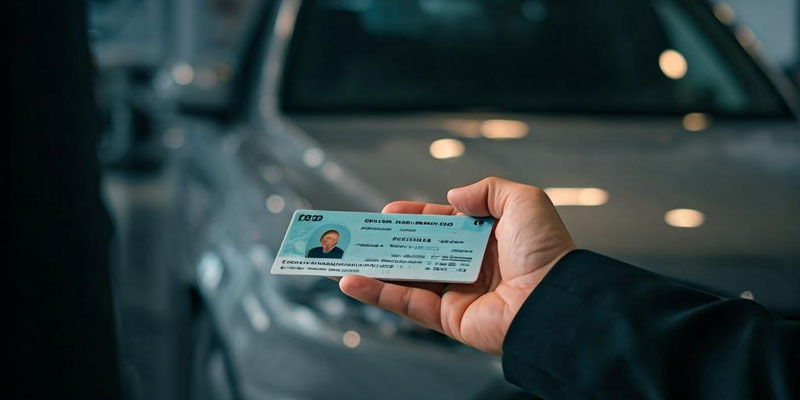
SOUTHFIELD, MI – A newly surfaced dark-web listing claims that 700Credit, a provider of credit-reporting and identity-verification services for auto dealers, suffered a substantial data breach in late October 2025 – potentially exposing more than eight million customer records.
What the Listing Claims
According to the listing, the compromised database includes highly sensitive consumer information commonly handled by credit-reporting services – full names, Social Security numbers, dates of birth, addresses, and potentially employment details. A sample of 100 records accompanying the listing reportedly matches the kinds of identity-verification data 700Credit typically stores.
The seller is allegedly offering the full dataset for sale after “negotiations with 700Credit” failed, indicating this may be an extortion or ransom situation.
At present, the breach has not been independently verified, and 700Credit has not issued a public confirmation.
Legal Action Underway
Less than a week after the dark-web listing gained attention, at least one class-action lawsuit was filed against 700Credit. A complaint extracted from court filings alleges harm to consumers whose personal data was exposed or placed at risk.
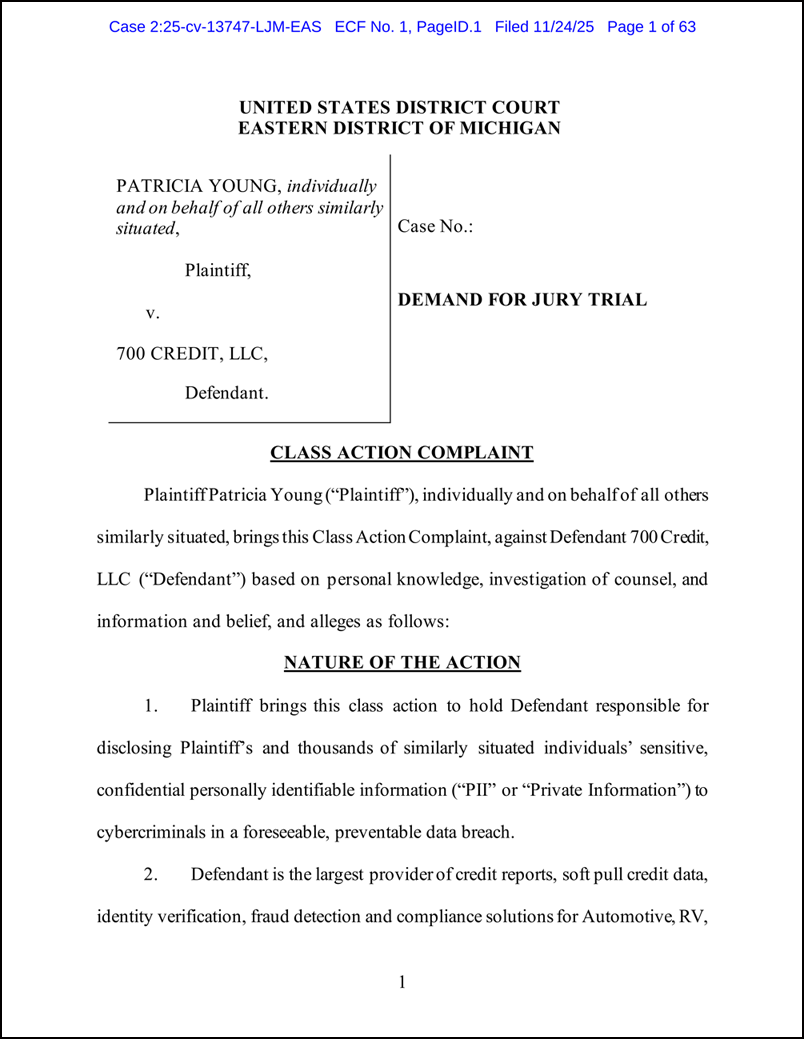
The lawsuit is currently pending; no court ruling or settlement has been announced.
Why 700Credit Is Widely Used in Auto Financing
700Credit describes itself as a major provider of credit reports, soft-pull credit data, identity verification, fraud detection, and compliance services, with a customer base that reportedly includes over 21,000 dealerships and more than 220 integration partners.
This reach implies that if the breach is real, a substantial portion of the auto-finance sector – including dealers, lenders, and individuals applying for auto credit – could be affected.
Unconfirmed But Potentially Serious Risks
If the data exposed in the alleged breach is accurate, impacted individuals could face enhanced risk of identity theft, credit-fraud attempts, or unauthorized use of their personal information. The exposure of Social Security numbers, dates of birth, and addresses is especially concerning, as those are commonly used to open fraudulent accounts or commit other forms of identity-based crimes.
Companies that rely on 700Credit – such as auto dealerships – may have legal and regulatory obligations: they may need to notify affected customers, assess their own liability (especially under data-privacy laws), and coordinate with insurers and legal counsel to mitigate risk. As one automotive-industry commentary notes, dealers should, at minimum, attempt to obtain full details from 700Credit, confirm which clients were impacted, and evaluate notification and compliance obligations.
Data Breaches and Third-Party Risk
The 700Credit incident, if confirmed, would be one of several high-profile data breaches in 2025, highlighting an ongoing trend of third-party vendors being exploited as an attack vector. Industry watchers argue that supply-chain risk and vendor oversight remain one of the gravest challenges to data security for businesses that depend on credit, identity, or other sensitive consumer services.
Historically, breaches at large-scale credit and reporting agencies have caused long-term fallout. For instance, the 2017 breach at Equifax exposed Social Security numbers, birthdates and personal information of over 140 million Americans – a cautionary benchmark for what can go wrong when credit-industry infrastructure is compromised.
What’s Still Unknown
- 700Credit has not publicly confirmed or denied the breach. No official statement has been released.
- Independent forensic verification of the breach, by cybersecurity experts, law enforcement or third-party auditors, is not yet available. The dark-web listing and the class-action filing remain the primary sources for the claim.
- It is unclear which customers (dealers, individual consumers, or both) are affected, or what share of the “more than eight million” records belong to active vs. former clients.
- The full scope of what data was compromised is not known. The leaked sample reportedly includes identity verification fields, but no payment card data has been confirmed.
What Affected Parties Should Do
For dealerships and other businesses using 700Credit’s services, analysts recommend immediate review of any communications or notices from 700Credit. They should:
- Request clarification on whether their customer data, or the data of customers they submitted, was included in the breach
- Notify their insurance providers and legal counsel if they believe they may have liability under data-privacy or consumer-protection laws
- Prepare for potential regulatory or consumer notices, including state-level requirements if residents of certain states are affected
- Consider offering identity-theft protection or credit-monitoring services to potentially impacted individuals as a precaution
Consumers who believe they may have had their information processed through 700Credit (for auto financing, credit applications, identity verification, etc.) should also be vigilant: monitor credit reports for suspicious activity, consider placing credit freezes or fraud alerts, and watch for official notices from 700Credit or dealerships.

About The Author: John Colascione is Chief Executive Officer of SEARCHEN NETWORKS®. He specializes in Website Monetization, is a Google AdWords Certified Professional, authored a how-to book called ”Mastering Your Website‘, and is a key player in several online businesses.
Add STRATEGIC REVENUE as a Google Preferred Source to see more of our business, technology, and digital strategy coverage in Google Search.
Add Strategic RevenueYou can now select the categories you're interested in and receive email updates when new articles are published in only those categories.


Important coverage. One thing worth adding to this conversation is that while this incident involved a dealer-facing CRM breach, there’s a separate, ongoing risk the industry still hasn’t addressed.
Legacy credit prequalification web apps that rely on simple form-fill name/address inputs — without identity verification before a soft pull — remain widely deployed. These workflows continue to act as identity fraud incubators, allowing bots and synthetic identities to generate fraudulent prequalification attempts that dealers often can’t see.
We outlined this risk earlier this year in a Public Service Announcement, later covered by Auto Finance News. The breach and the prequal fraud issue are unrelated, but together they underscore the same reality: the prequalification front door needs to move to identity-first processes if dealers and consumers are going to be properly protected.
Happy to provide additional context if helpful.